Jump is a Synth rock/ Hard rock track by band Van Halen and was produced by Ted Templeman. It was released in December 1983 from the album titled 1984, this album was recorded entirely at Eddie Van Halen’s 5150 home studio. It is Van Halen’s most successful single to date and features a synth keyboard part played on an Oberheim OB-Xa, the synth line was written around 1981 by Eddie Van Halen however it was rejected by the other band members at the time. The track also contains a guitar solo which was cut together from different takes (https://en.wikipedia.org/wiki/Jump_(Van_Halen_song)). The track features David Lee Roth (Vocals), Eddie Van Halen (Guitar, Keyboards and Backing vocals), Michael Anthony (Bass and Backing vocals) and Alex Van Halen (Drums) (https://music.fandom.com/wiki/Jump_(Van_Halen_song)). This single is in the key of C major at 131 bpm in the time signature of 4/4 (https://findsongtempo.com/artists/van-halen/songs/jump-0a0c7124-f9db-47a7-a07c-b98f5d67e5fa).
David Lee Roth, the band’s lead singer mentions that the meaning and inspiration behind the lyrics was a TV news story in which a man was about to commit suicide by jumping off a building, this made Roth thought “might as well jump” (https://www.songfacts.com/facts/van-halen/jump).
This track is quite bright and dense, thanks to the inclusion of the synth keyboard, and is recorded in stereo and this is proven by the screenshot below.
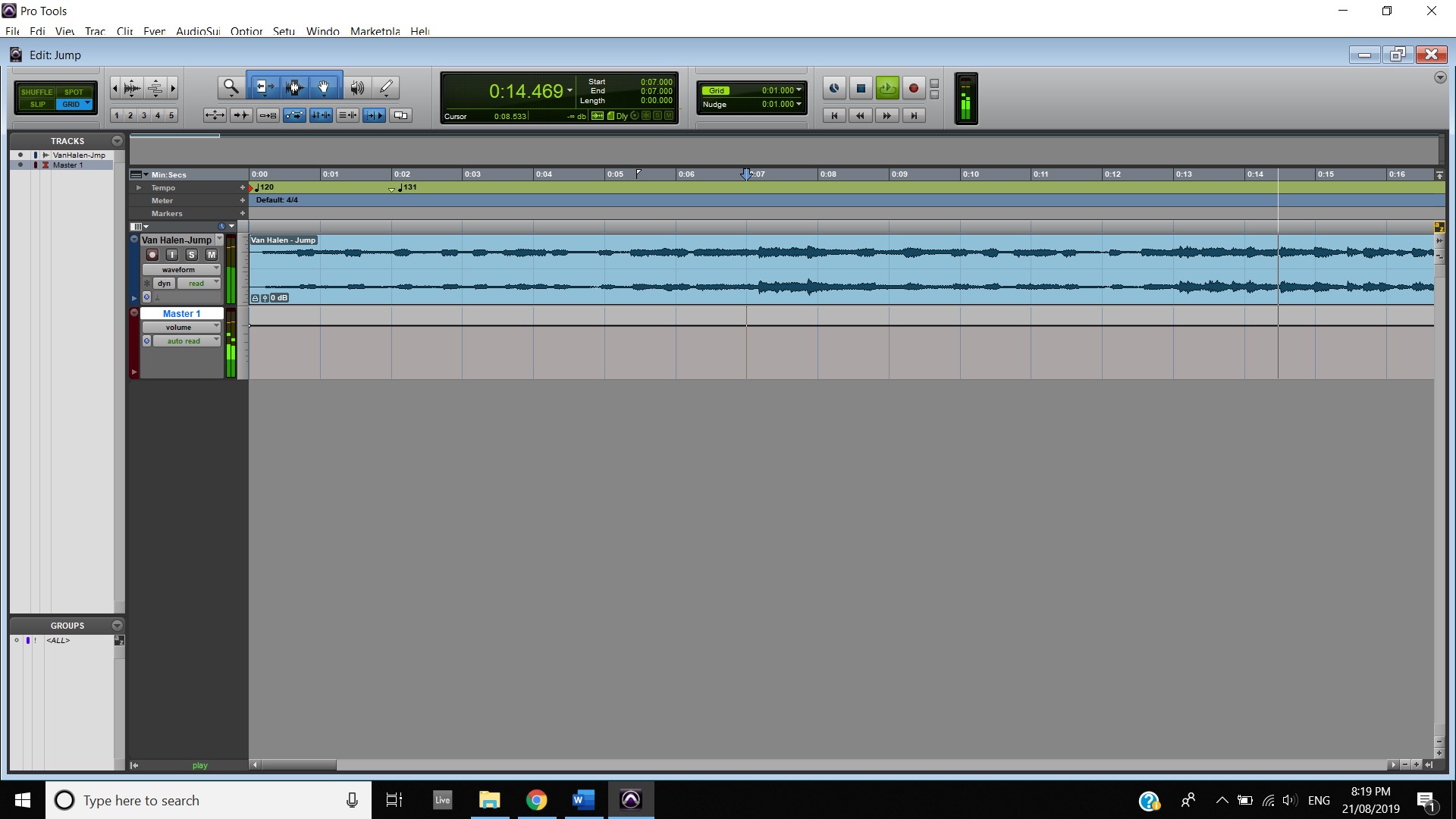
In terms of track panning, the vocals, bass and backing vocals are all centrally panned. The guitar is quite interesting as for majority of the song it is panned to the centre apart from the synth solo where it is panned to the right channel as shown through 2:34 mins to 2:40 mins where it is in the background. The keyboard has multiple tracks, one has the main and famous synth melody coming through the left channel, accompanying this during the melody the right channel has delayed hits of the major notes of this as proven during 0:00 mins to 0:20 mins. The keyboard also has random long notes playing through the right channel throughout the track an example of this can be found at 1:00 mins to 1:15 mins. For the drums, during most of the song they are panned to the centre, although there are times where this is not the case, there is an audible cymbal hit on the right channel for example 0:59 mins to 1:15 mins and finally, the drum rolls bounce between the left and right channels to create effect and a example of this can be found 1:55 mins to 2:02 mins.
For most of this track the frequency levels are fairly evenly represented, although David Lee Roth’s vocal do spike the mid frequencies in parts throughout the track, especially during parts in the chorus and both of these are shown below.
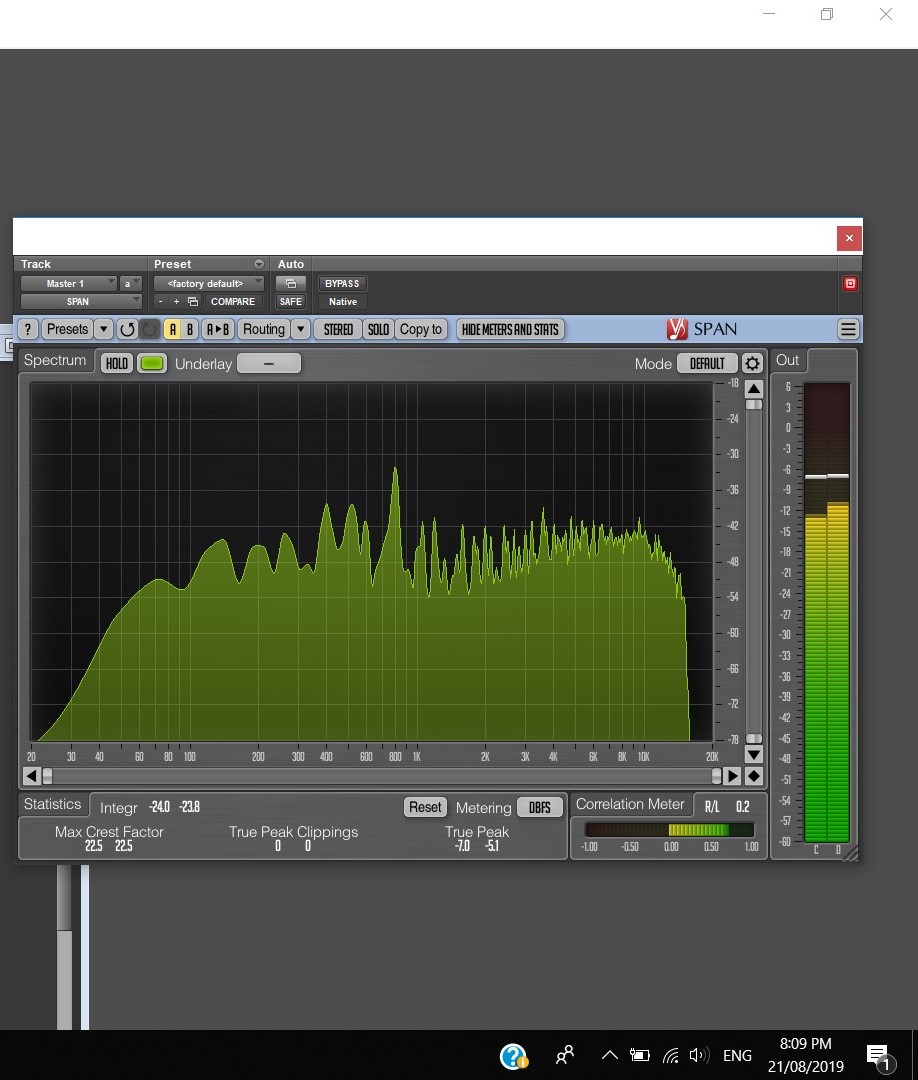
During the Synth keyboard intro, the mid-high frequencies (300 hz- 6Khz) are boosted over the low frequencies (First Screenshot), this changes with the inclusion of the drums before the vocals (Second Screenshot) as the low frequencies level out with the mid and high making them all evenly represented.
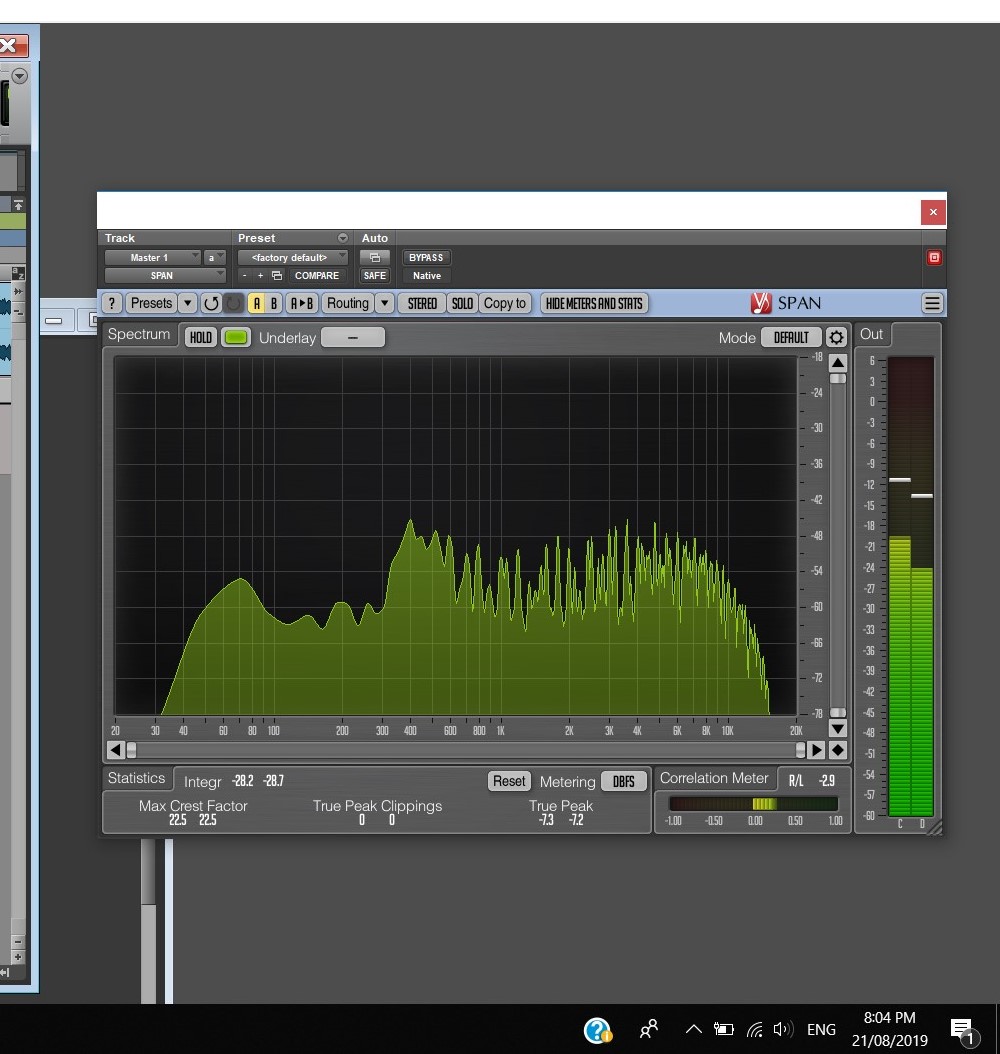
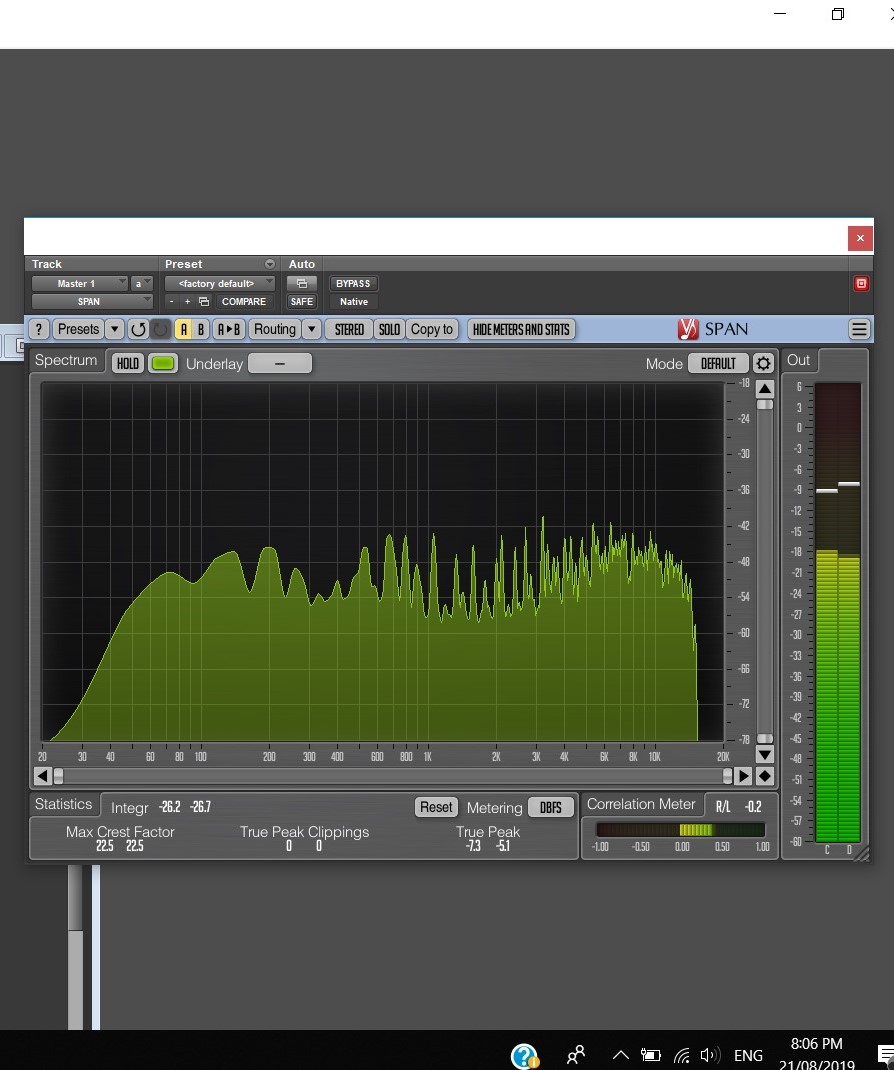
There are also frequency spikes during the guitar solo and the synth solo. The guitar solo spiked and raised up the high frequencies (just past 2khz), shown in the first screenshot, while the synth solo, in the second screenshot, directly following the guitar solo boosted the mid-high frequencies. At the end of the track it fades out.
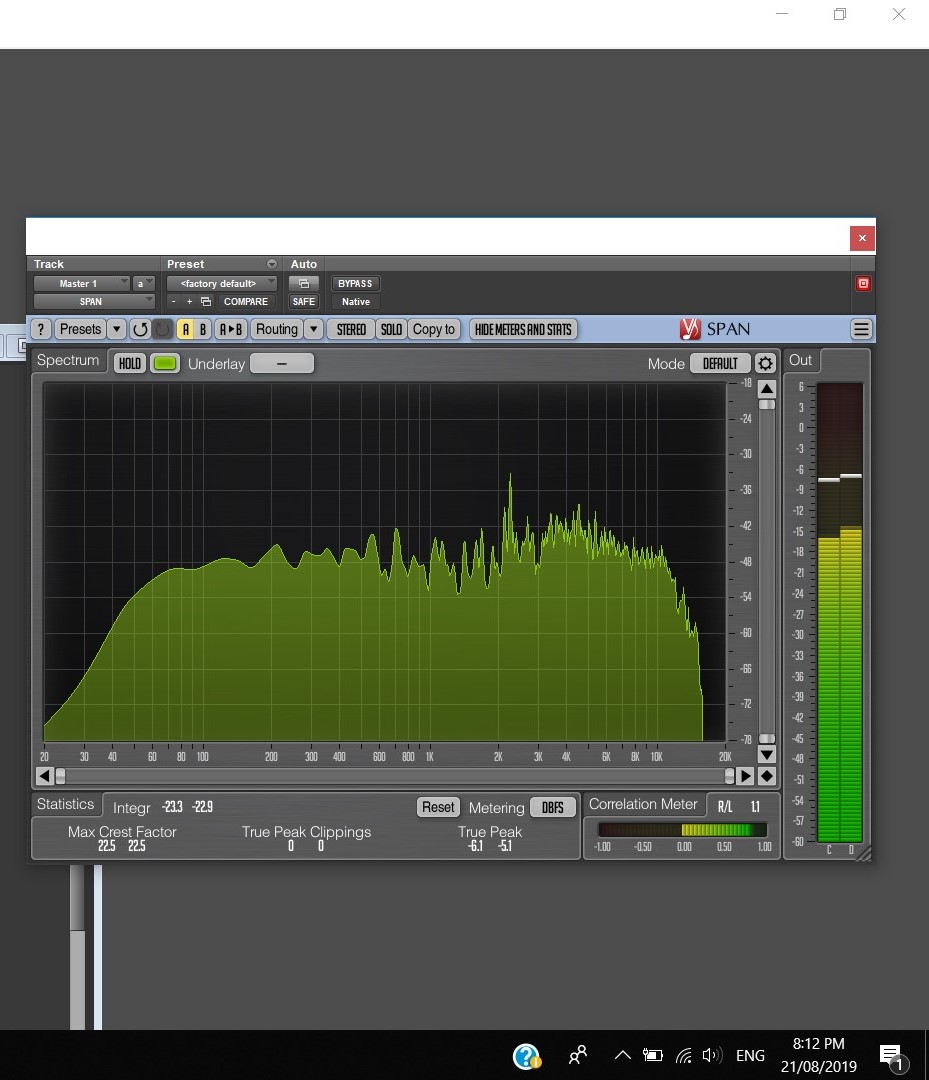
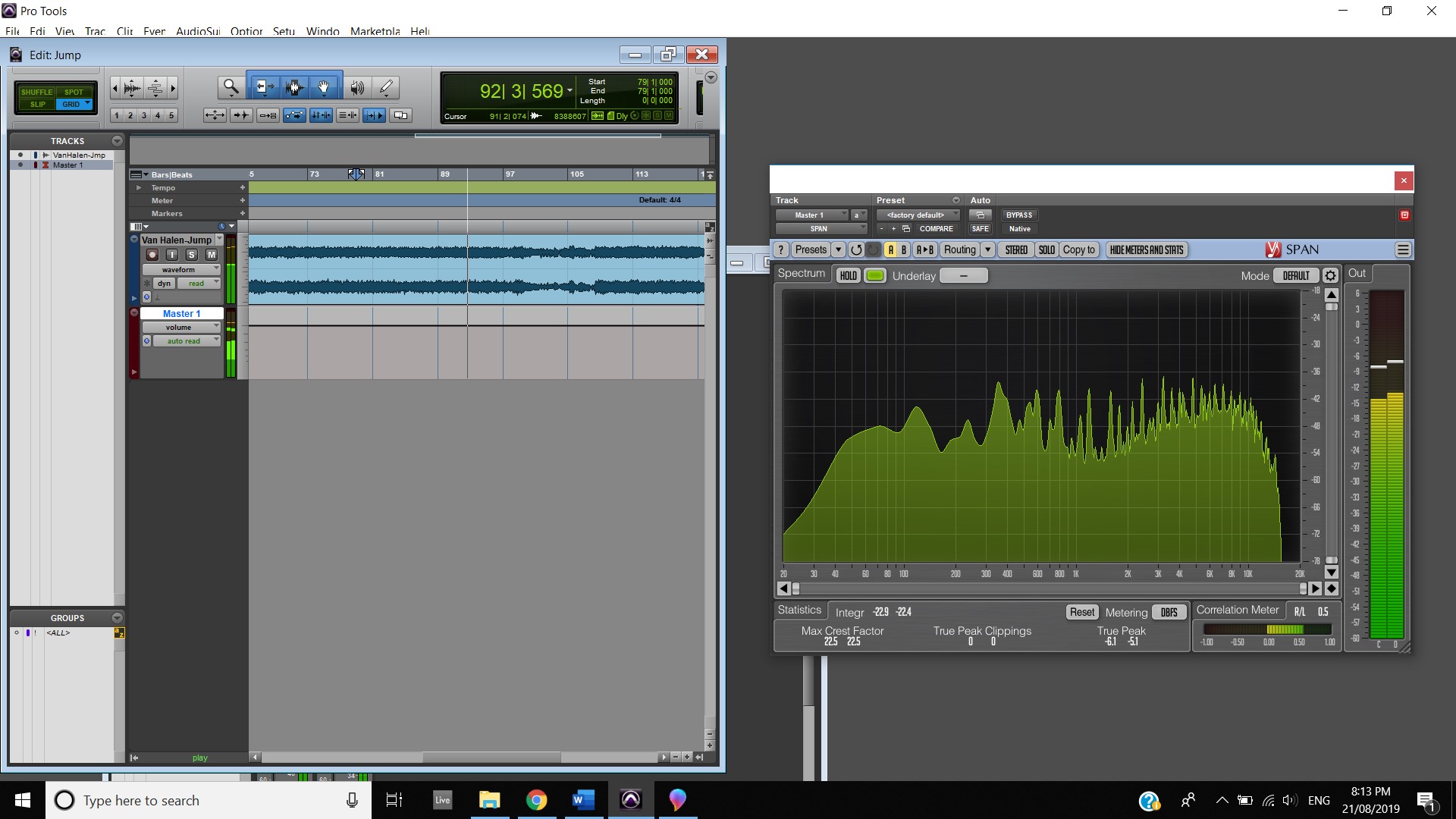
The track is mixed fairly evenly with the loudest point on the master fader being -5.2dB. During the intro it hits the lowest point on the master fader (apart from the fade out) at -10.7dB to -9.7dB. Throughout the rest of the track the master fader sits between -9.0dB to -6.0dB.

 Music weekly blog