Tomorrow Never Knows is a rock song by The Beatles and was recorded and released in 1966. The track was written by John Lennon and Paul McCartney and produced by George Martin. It is said that this marked a different turn for the Beatles as the band fully embraced the potential of a studio without any consideration of reproduction live in concert. Lennon found his inspiration from the book “The Psychedelic Experience: A manual based on the Tibetan Book of the Dead” while on LSD, Lennon recorded himself reading the book and played it back while the drug took over and was so excited by the result he wanted to capture the LSD experience in song (https://en.wikipedia.org/wiki/Tomorrow_Never_Knows) & (https://www.beatlesbible.com/songs/tomorrow-never-knows/).
The track features John Lennon (Vocals, Organ and Tape Loops), Paul McCartney (Lead Guitar, Bass and Tape Loops), George Harrison (Guitar, Sitar, Tambura and Tape loops), Ringo Starr (Drums, Tambourine and Tape Loops) and George Martin (Piano) (https://www.beatlesbible.com/songs/tomorrow-never-knows/). The Track is in the key of F at 128 BPM with a time signature of 4/4 (https://findsongtempo.com/artists/the-beatles/songs/tomorrow-never-knows). The song had very revolutionary production techniques at the time with the use of reversed sounds, tape loops, automatic double tracking and experimental instrumentation/ recording. The night before they recorded the song, Paul McCartney created 16 tape loops of guitar sounds and odd vocals.
The continued Tibetan influence is shown with the modified sounds of the Sitar and Tanpura. Not only was Lennon’s vocals double tracked but his vocals were recorded while played by a Leslie speaker which modified the sound by rotating the loudspeakers this gave the vocals a near effect as well as a far, reverberant effect. (https://genius.com/The-beatles-tomorrow-never-knows-lyrics) & (https://www.songfacts.com/facts/the-beatles/tomorrow-never-knows).
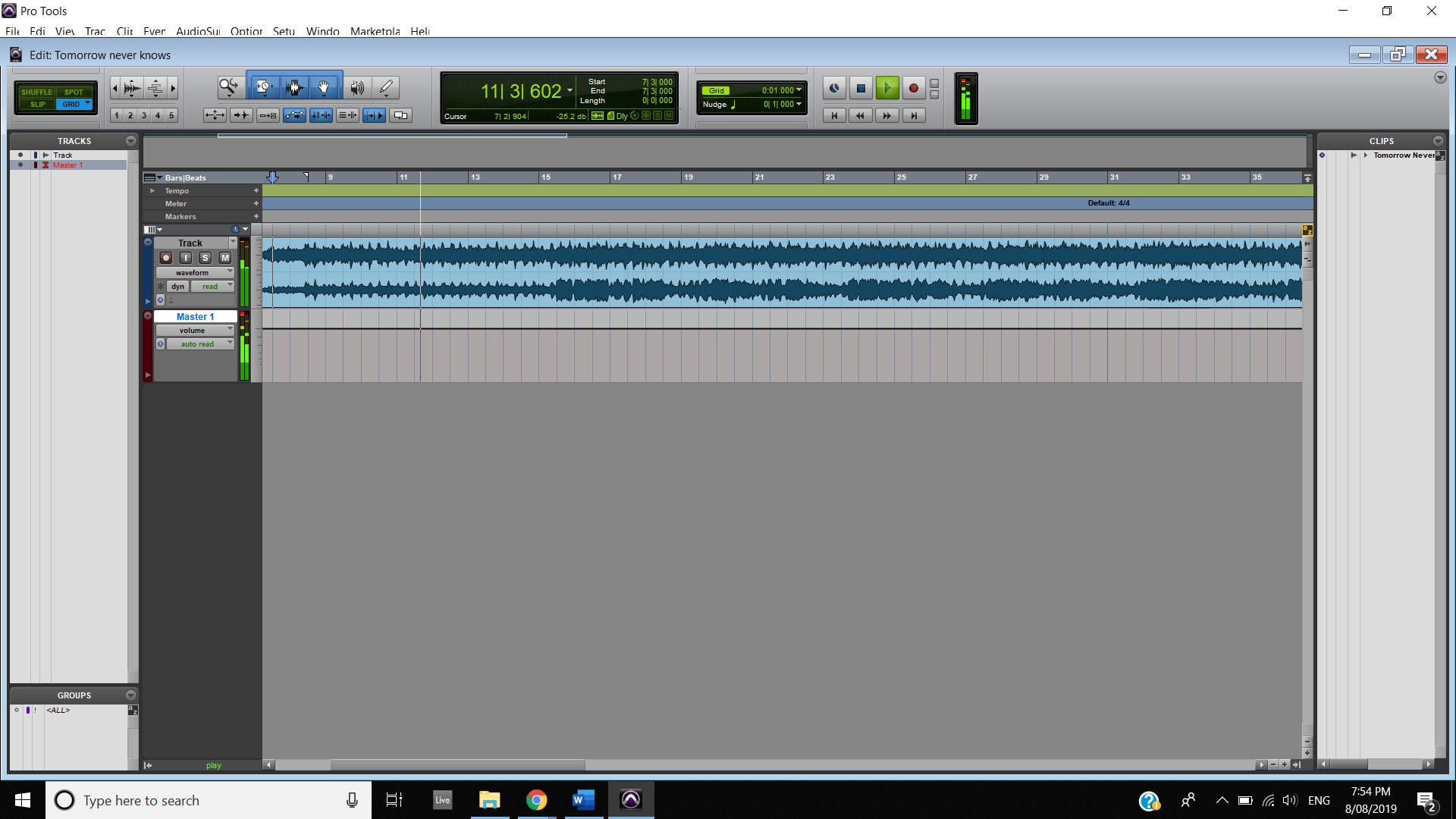
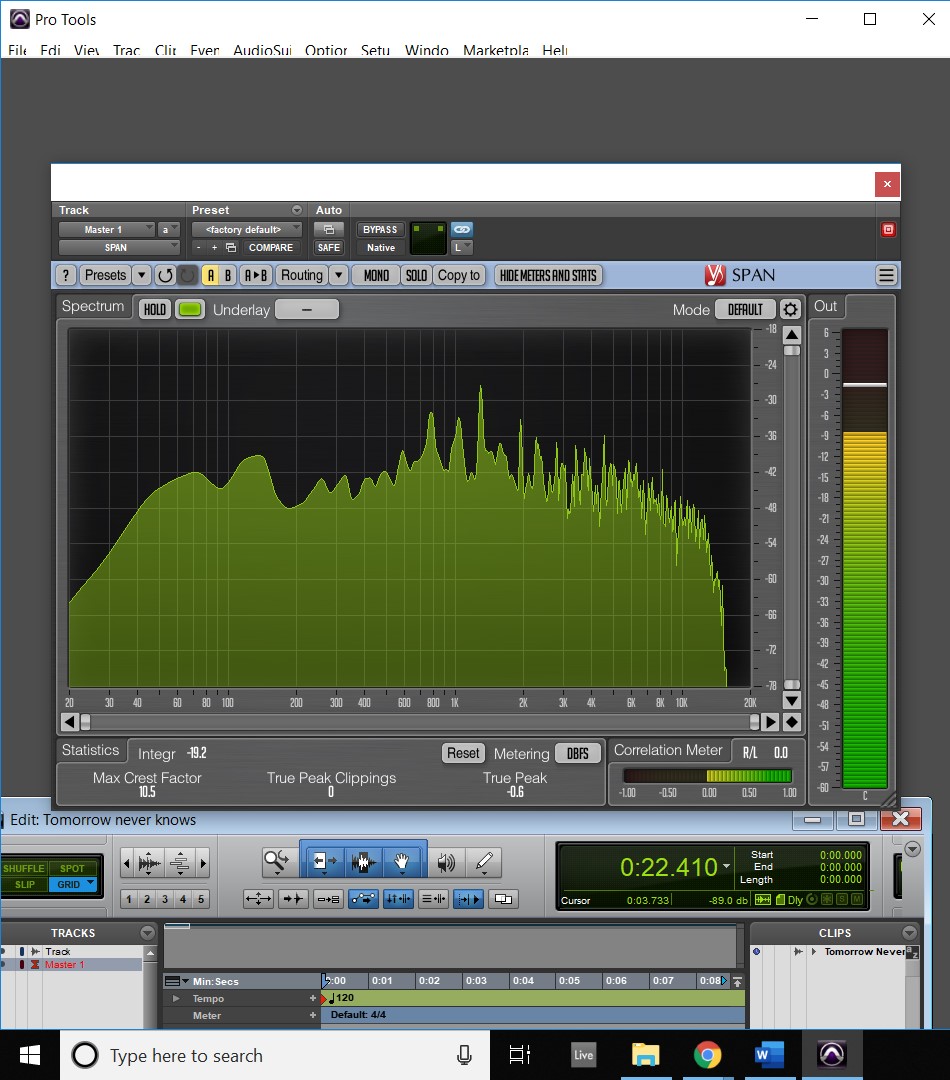
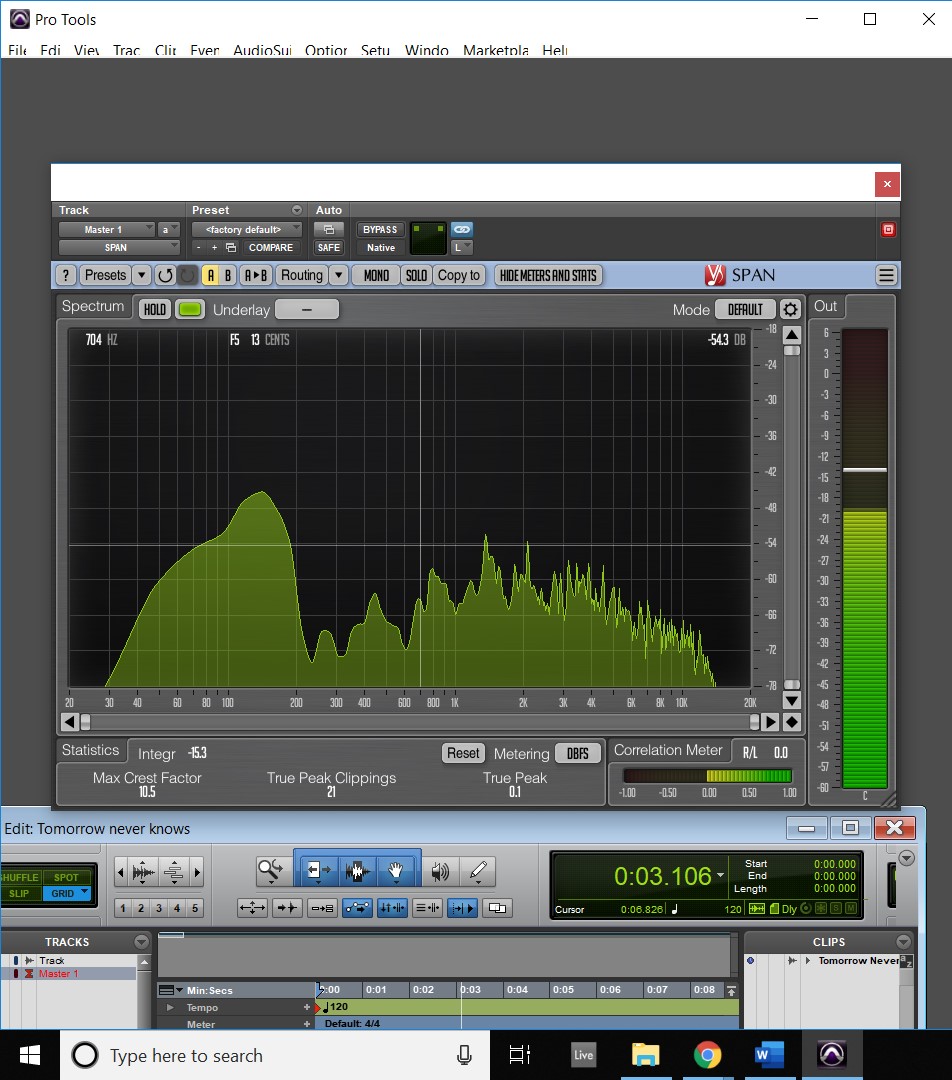
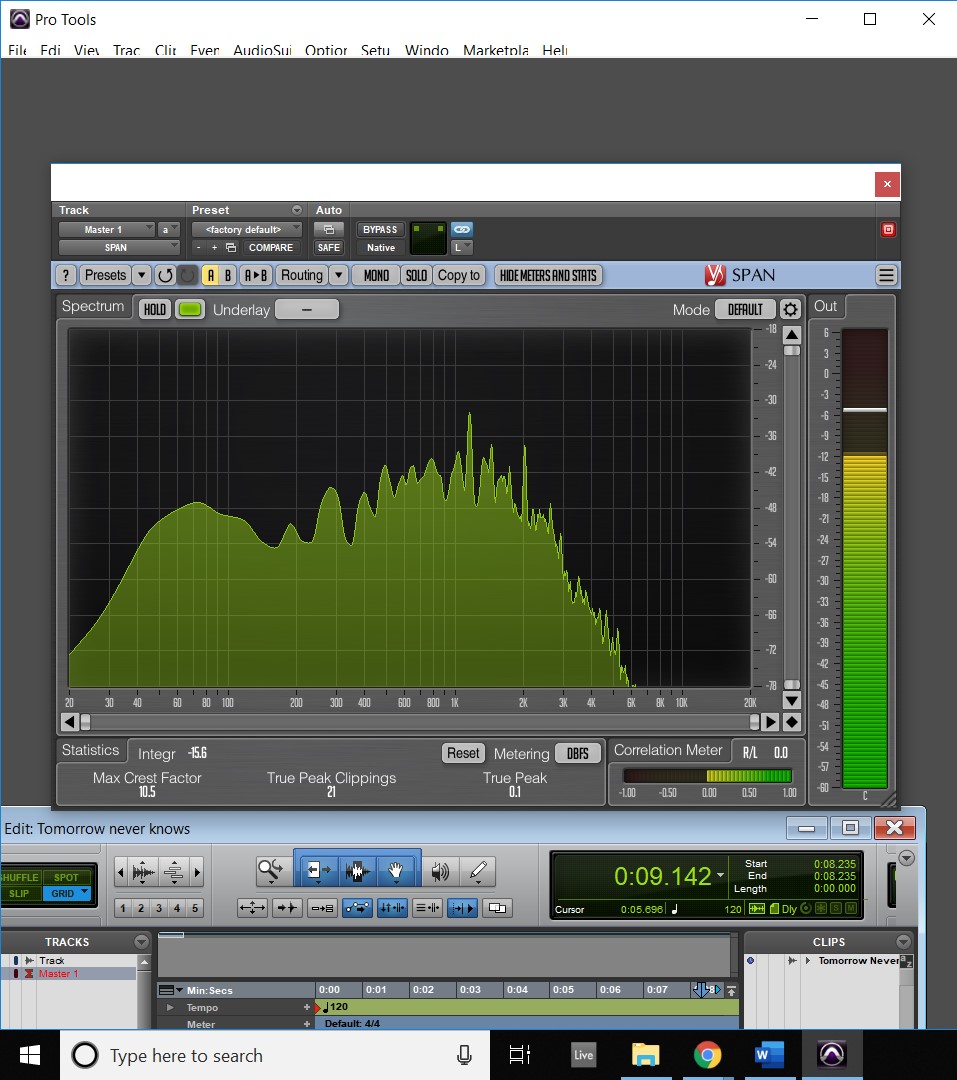
Looking further into the production itself, the way it is recorded in stereo is quite unique with the vocals panned to the right (there is some vocals at 0:01-0:02 coming through the left channel) and the rest of the instruments panned to the left and have a dry feel which creates an interesting effect. The drums have been centred for this track however there is some drum hits/effects on hits that do come through prominently on the right channel. A screenshot of this Stereo format is provided below. The track itself is very dense through the duration of the track with lots of things happening at the one time but it builds up to this dense feeling through the use of quite a sparse introduction and it builds from there. The record is mixed very high at the master fader clocking at -3.9dB during intro before the drums (0:05-0:14) and reaching between -0.6dB to 0.0dB during the body of the song, 0.0dB was the most common read through this track however the intro (0:00-0:05) was the lowest at the master fader at -14.6dB. Looking into the frequency analyser it is very clear that all frequency levels are fairly even and represent well within this track, however there is a slight spike in the mid frequency when John Lennon sings the vocals, this is proven via a screenshot taken at 0:22 below. During the first half of the intro the low frequencies are boosted and this is shown below, however for the second half of the intro the lows seem to almost disappear and the mid frequencies are boosted and this is also captured below.
You’ve Lost That Lovin’ Feeling is a single written by Phil Spector, Barry Mann and Cynthia Weil and recorded and released by Bill Medley and Bobby Hatfield (known as the Righteous Brothers) in 1964. The track was produced by Phil Spector and featured Spector’s Wall of Sound recording technique. Music writer Robert Palmer said this technique was used to create a sound that was “deliberately blurry, atmospheric, and of course huge; Wagnerian rock n roll with all the trimmings”. Due to this historic technique the single was inducted into the National Recording Registry by the Library of Congress for being “culturally, historically or aesthetically significant” (https://en.wikipedia.org/wiki/You%27ve_Lost_That_Lovin%27_Feelin%27). The recording of the single took place at Studio A of Gold Star Studios in LA. The instrumental tracks were recorded, cut and layered to create the wall of sound effect prior to the vocals being recorded. All recording was done mono so Phil Spector could modify the sounds to his tastes. Spector and Larry Levine (Sound Engineer) started by recording four acoustic guitars, then three pianos, then three basses, then two trumpets, two trombones and three saxophones and then the drums before the vocals and strings overdubbed on a separate track. The instrumental tracks feature the musicians known as “the wrecking crew” with Don Randi on piano, Tommy Tedesco and Barney Kessel on guitar, Carol Kaye and Ray Pohlman on bass, Steve Douglas on sax and Earl Palmer on drums. The background singers were a vocal group known as the Blossoms and joining them was a young Cher (https://en.wikipedia.org/wiki/You%27ve_Lost_That_Lovin%27_Feelin%27). The track is in the key of C major at 95 BPM with a time signature of 4/4 (https://findsongtempo.com/artists/the-righteous-brothers-714d40cd-b9e9-4ad9-bb1d-5c581f08f798/songs/you-ve-lost-that-lovin-feelin-f33911eb-08b1-4d2c-893c-808870010e4f).
Another production technique Spector used was that he made the musicians wear headphones which was a new concept at the time and this was used so the musicians were aware of how much echo and other effects Spector was placing on them and their instrument (https://www.stereogum.com/2006380/the-number-ones-the-righteous-brothers-youve-lost-that-lovin-feeling/franchises/the-number-ones/).
As mentioned above all recording for this track was recorded in mono however it is mixed, this is proven by the following screenshot and the track panning. In this track the vocals (including reverb effects) and the strings are panned to the right and the rest of the instruments that feature the wall of sound technique and background singers are panned to the left.
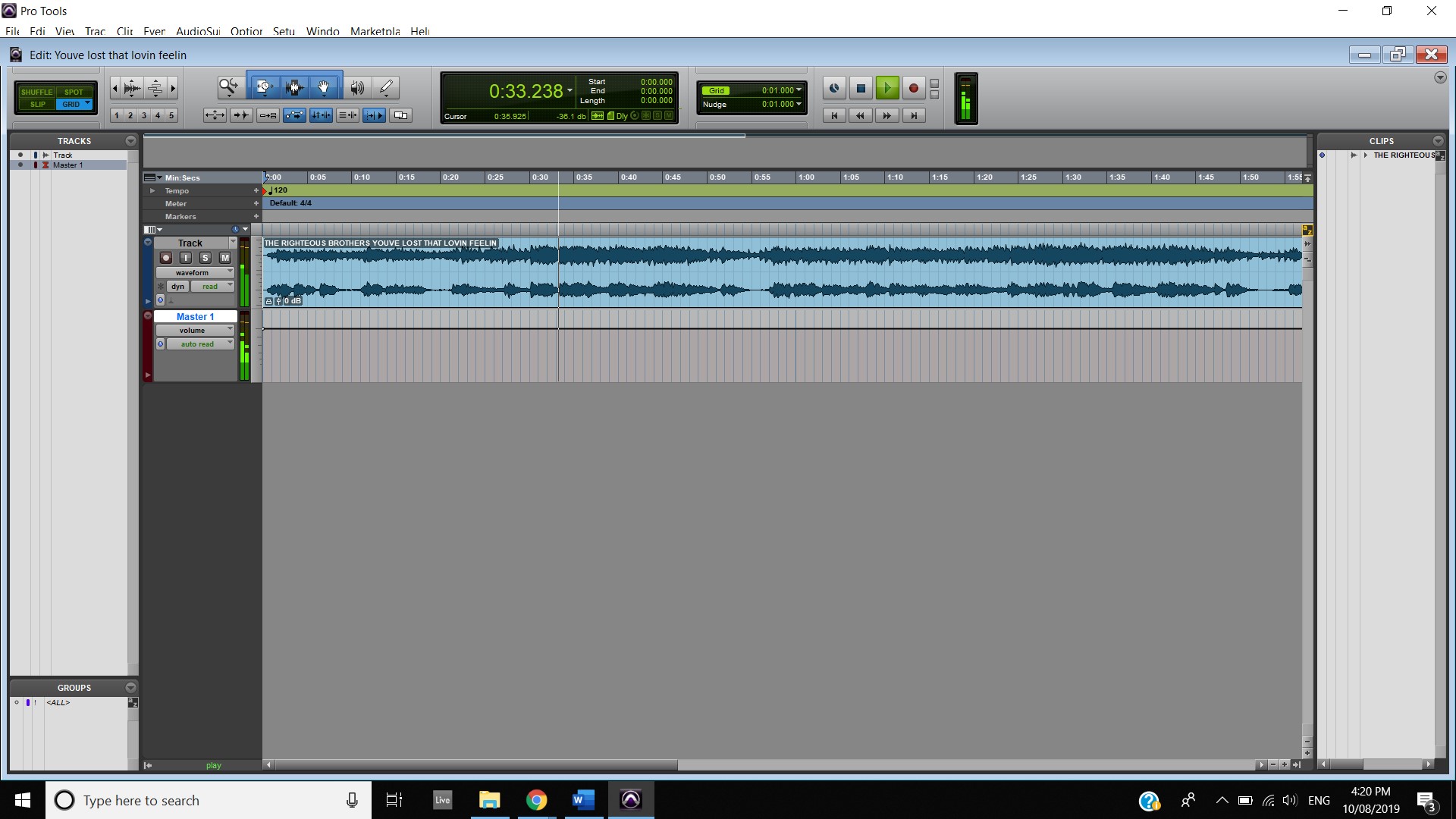
In terms of dynamic range, the track starts soft at the master fader (-5.6 dB during the intro) then slowly starts to be mixed louder as it the master fader hits between -4.6 dB to -3 dB during the pre-chorus then hits -2.3 dB during the first chorus then lowers to between -6.0 dB to -2.0 dB during the second verse only to raise to -1.4 dB during the second chorus. The track gets to its softest point post the second chorus reaching -12 dB then builds during this time to reach the finale and fade where it reaches its loudest point at -0.9 dB. The tone for the track overall has a quite middy tone however there is aspects of this production that have a bright tones (Strings and drums) and dark tones (Medley’s basso vocals). The lyrics themselves have quite a sad, dark tone to them, for example, “You never close your eyes anymore when I kiss your lips” or “If you would only love me like you used to do, yeah” (https://genius.com/The-righteous-brothers-youve-lost-that-lovin-feelin-lyrics).
Throughout most of the duration of the song all frequencies levels are fairly evenly represented. There are a few parts of the track where this is not the case. During the beginning of the track Medley’s basso vocals boost the low frequencies quite high and this is shown below.
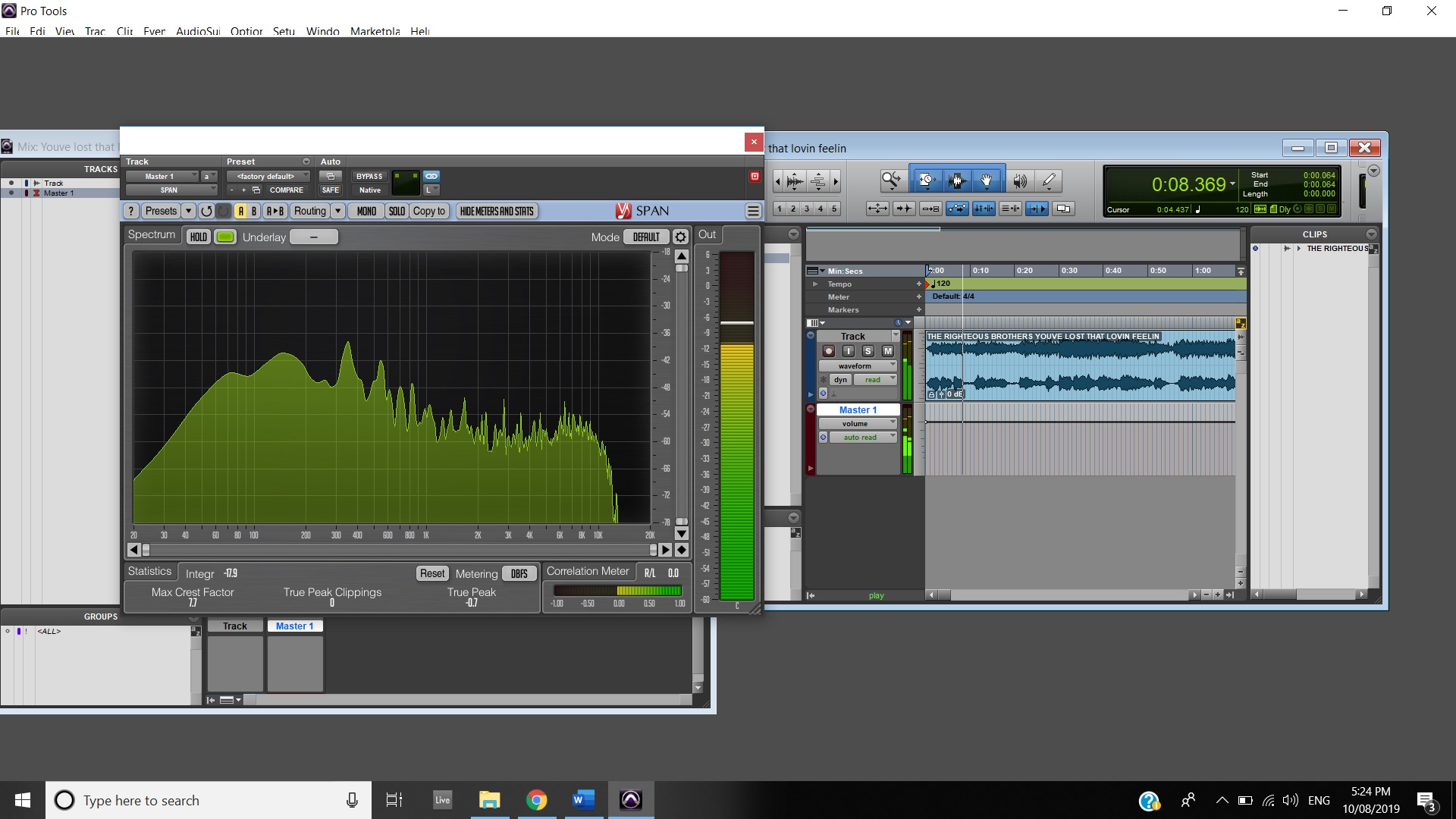
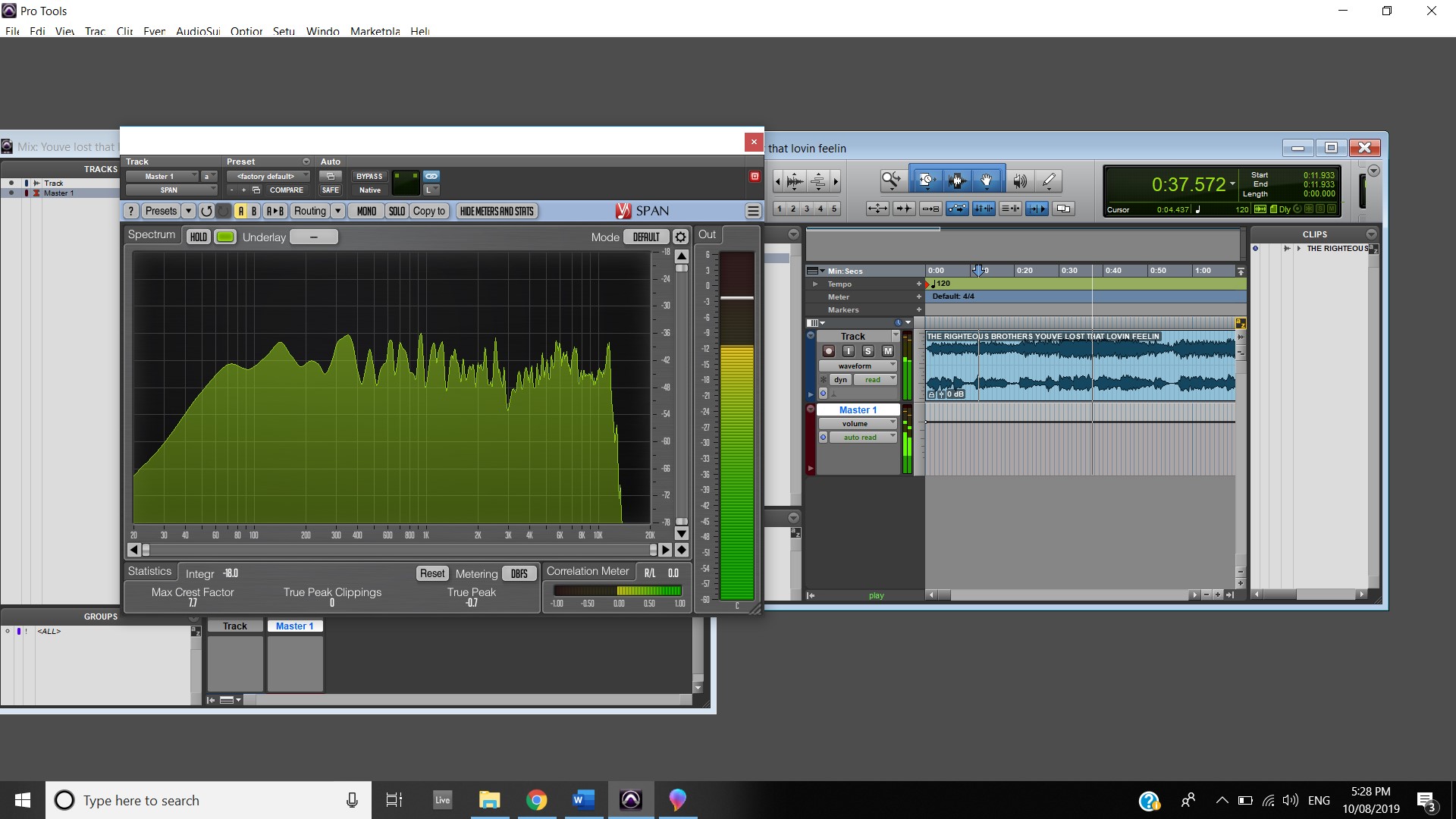
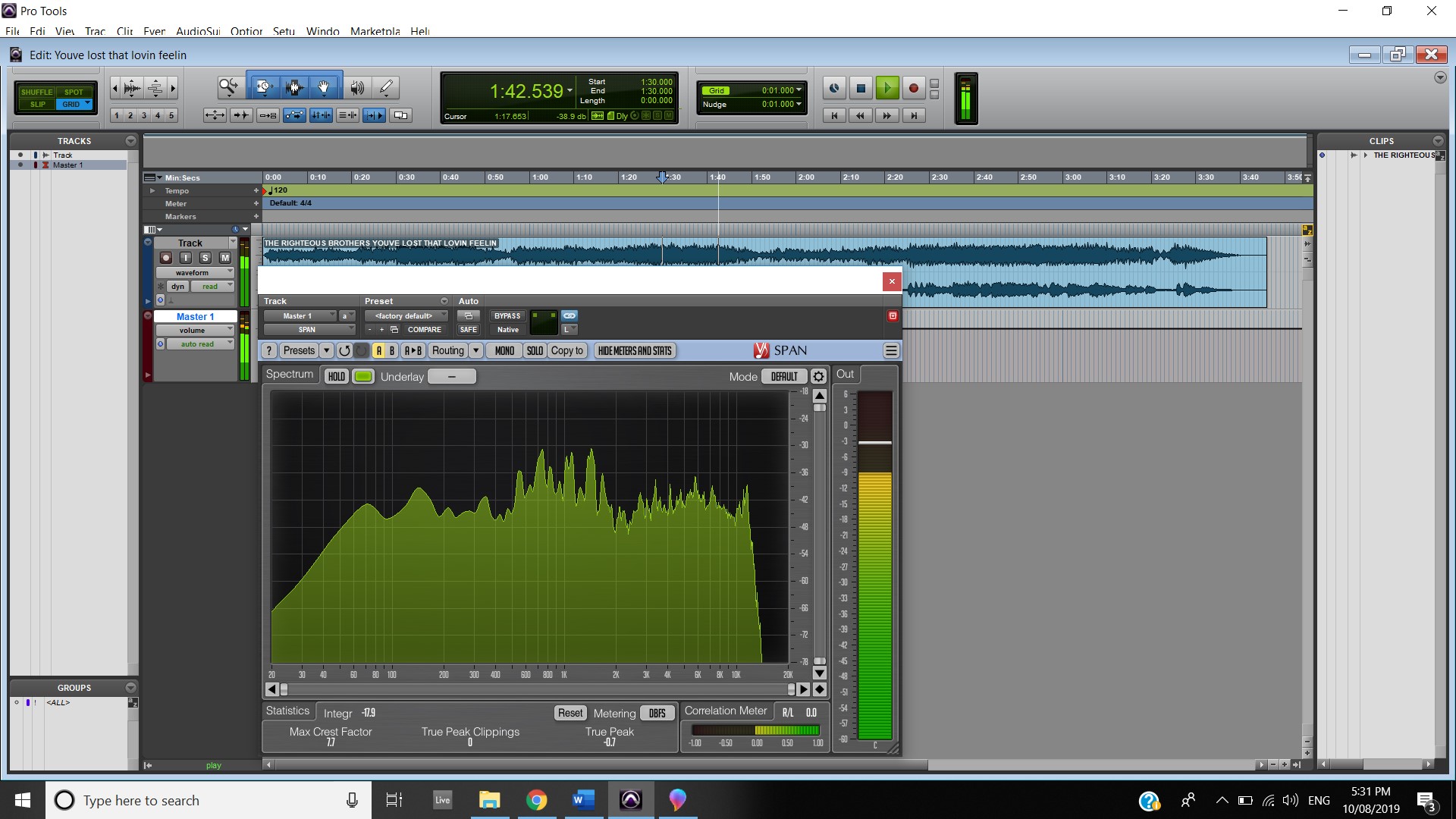
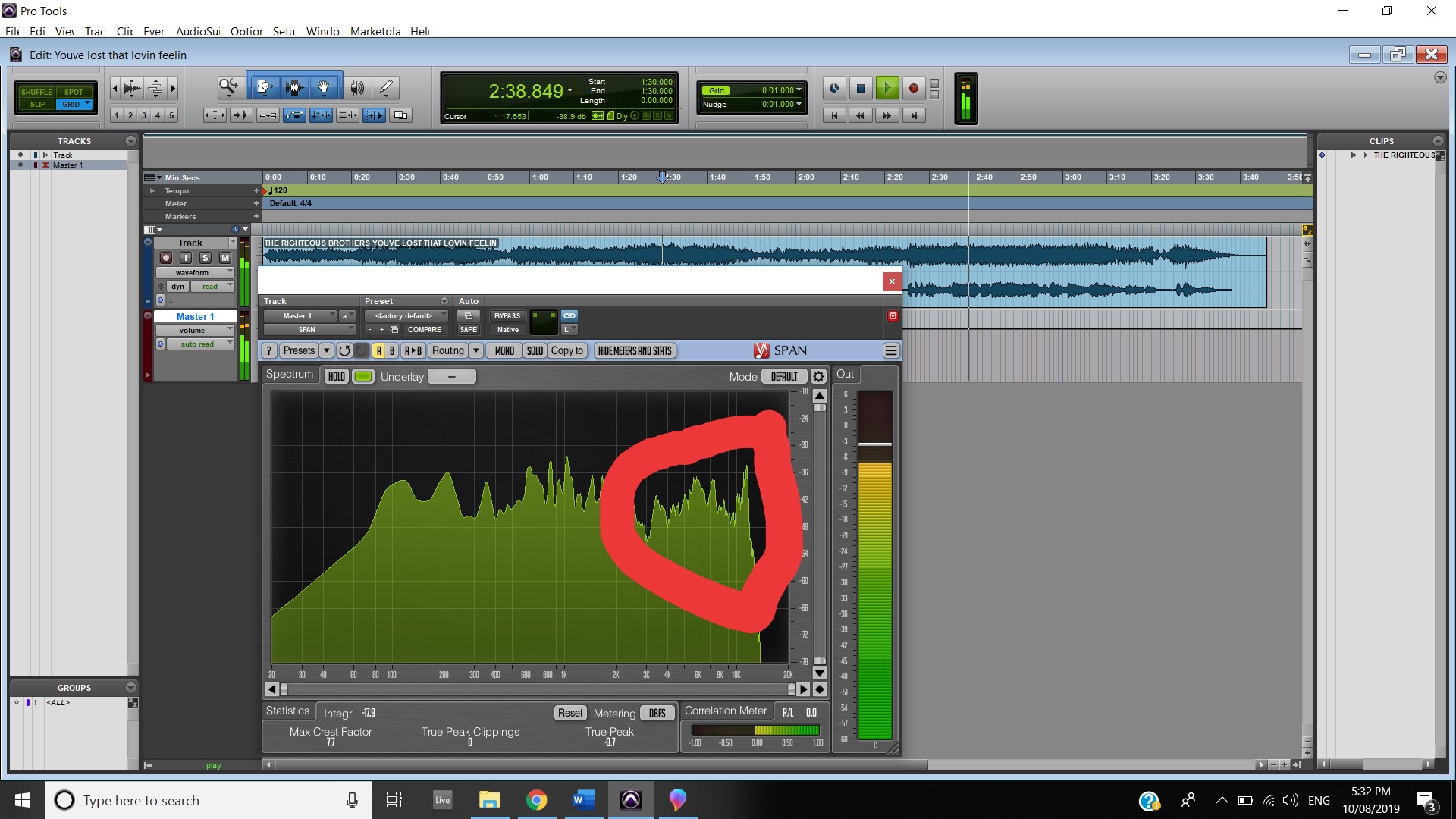
The frequencies even out as the song continues (First Screenshot below) however the mid frequencies do spike (Second Screenshot below). The high frequencies mainly spike through the hit of the tambourine, shown in the Third Screenshot below, however it was never enough to be boosted higher than the other frequencies.

 Music weekly blog