How high the moon is a jazz tune originally written by Nancy Hamilton and Morgan Lewis (https://en.wikipedia.org/wiki/How_High_the_Moon). It was originally performed in the 1940 on Broadway by Alfred Drake and Frances Comstock. On January 4 1951, Les Paul and Mary Ford recorded their own version of the song. The song is written in a 4/4 time signature in the key of B minor at 120 BPM (https://findsongtempo.com/artists/les-paul/songs/how-high-the-moon-45050c6a-4efe-476d-8f57-f9fc2c994e0b). This version was recorded on a Ampex 300 reel to reel tape machine modified with a fourth head to allow sound on sound recording and is vastly different from the original version of the song as there is no other instrumentals parts apart from Les Paul playing all parts (including the bass) on the electric guitar and Mary Ford’s layered vocals (https://www.guitarplayer.com/players/gp-editors-favourite-recordings-by-les-paul-how-high-the-moon). There is 12 different guitar parts and 12 different vocal tracks (http://www.loc.gov/static/programs/national-recording-preservation-board/documents/HowHighTheMoon.pdf) that Les Paul recorded on to the Ampex 300, The slapback Echo for these parts was also produced on this machine. Mary Ford’s vocals are layered multiple times and the use of room reverb has been taken advantage of, this is mainly shown during her “solo” at 1:53-2:03 mins. There is a lot going with this version of the song with the build-up of guitar parts truly carrying the song along which gives it a bright and jumpy feel compared to the original, however, there is two parts throughout the song in which the denseness of the multiple guitar tracks disappear and Mary Ford’s vocals only remain, these are at 1:29-1:31 mins and 1:53-1:55 mins.
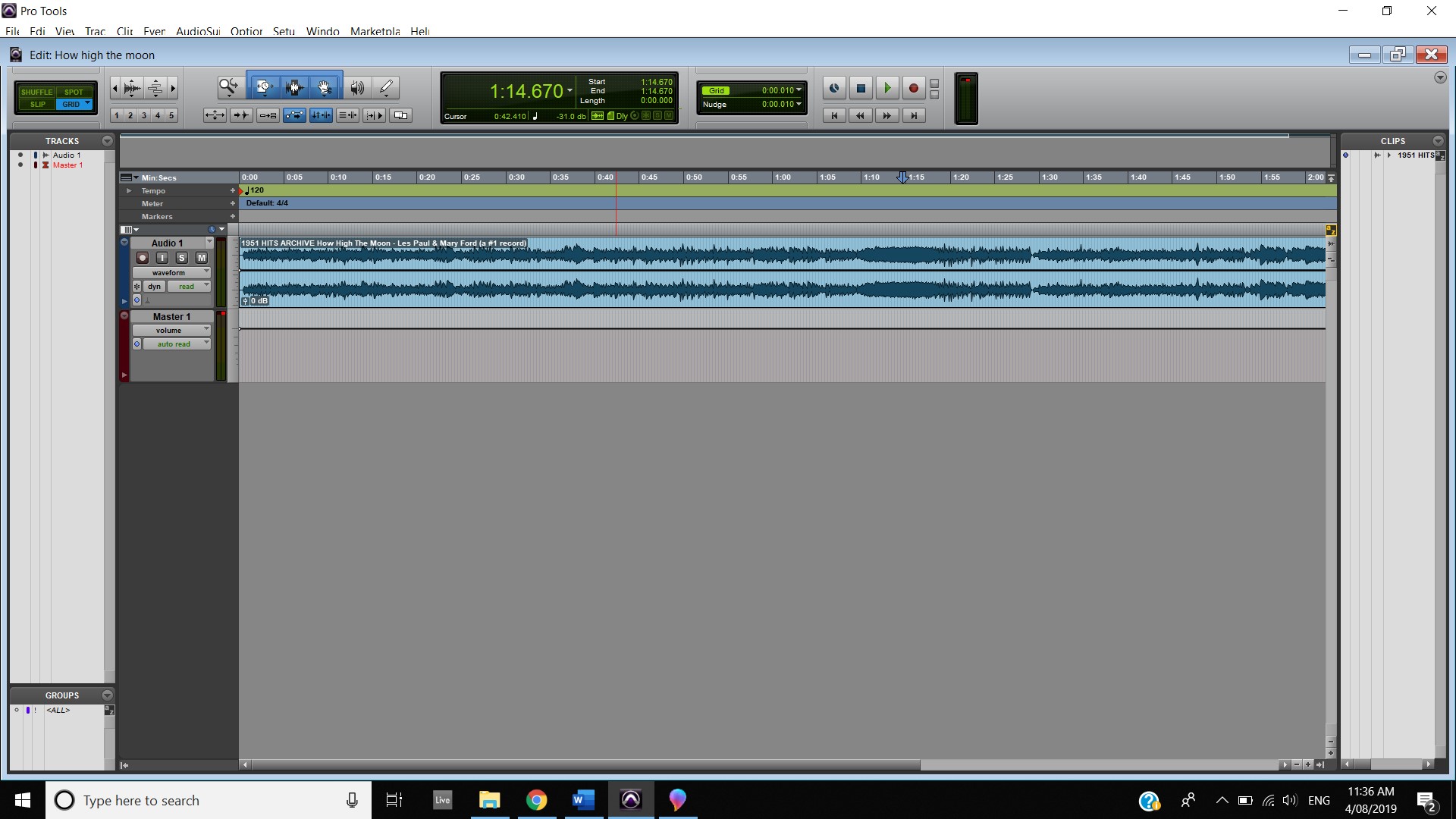
Looking more critically into the production, it is a mono recording as shown with the screenshot below.
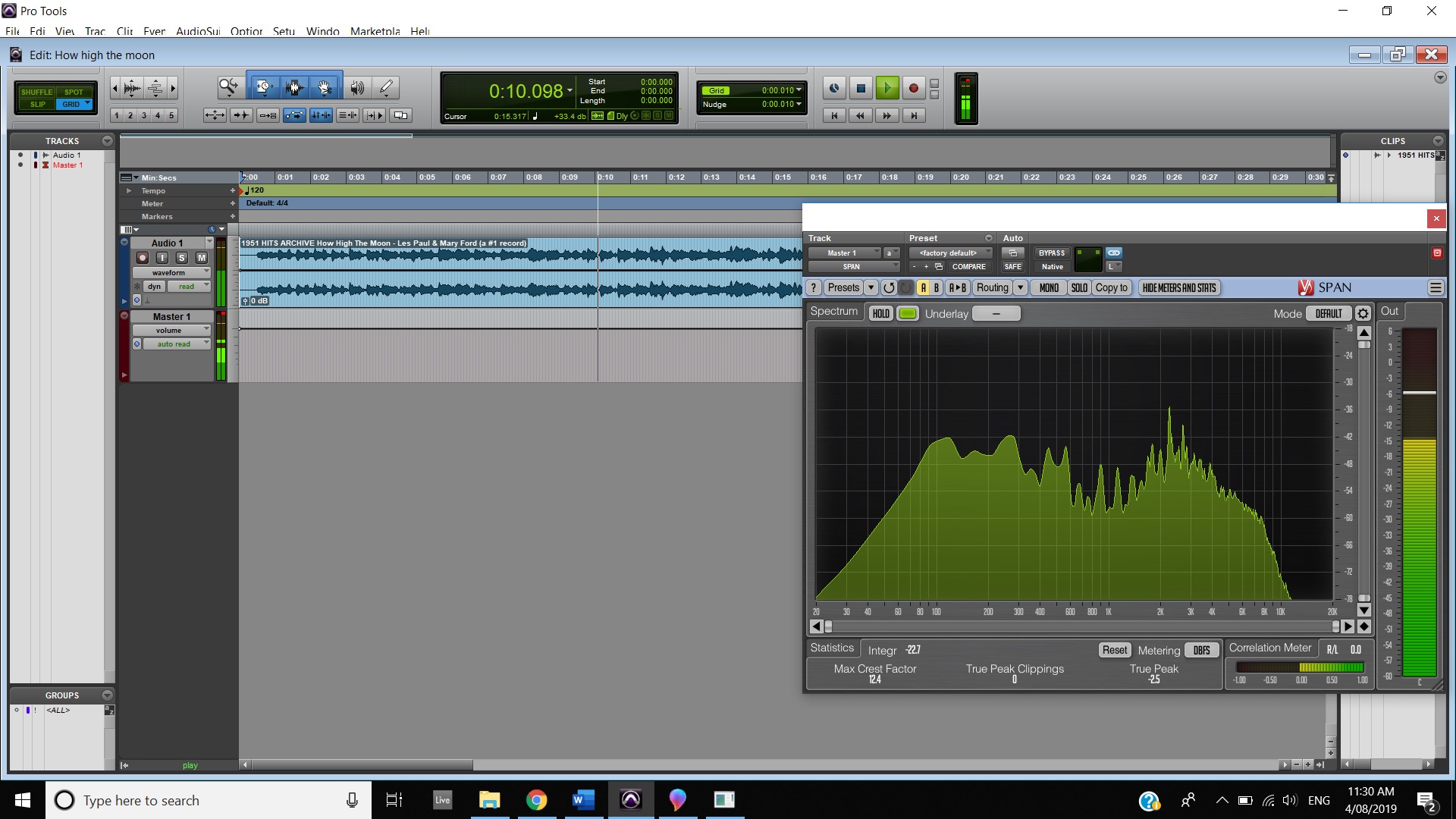
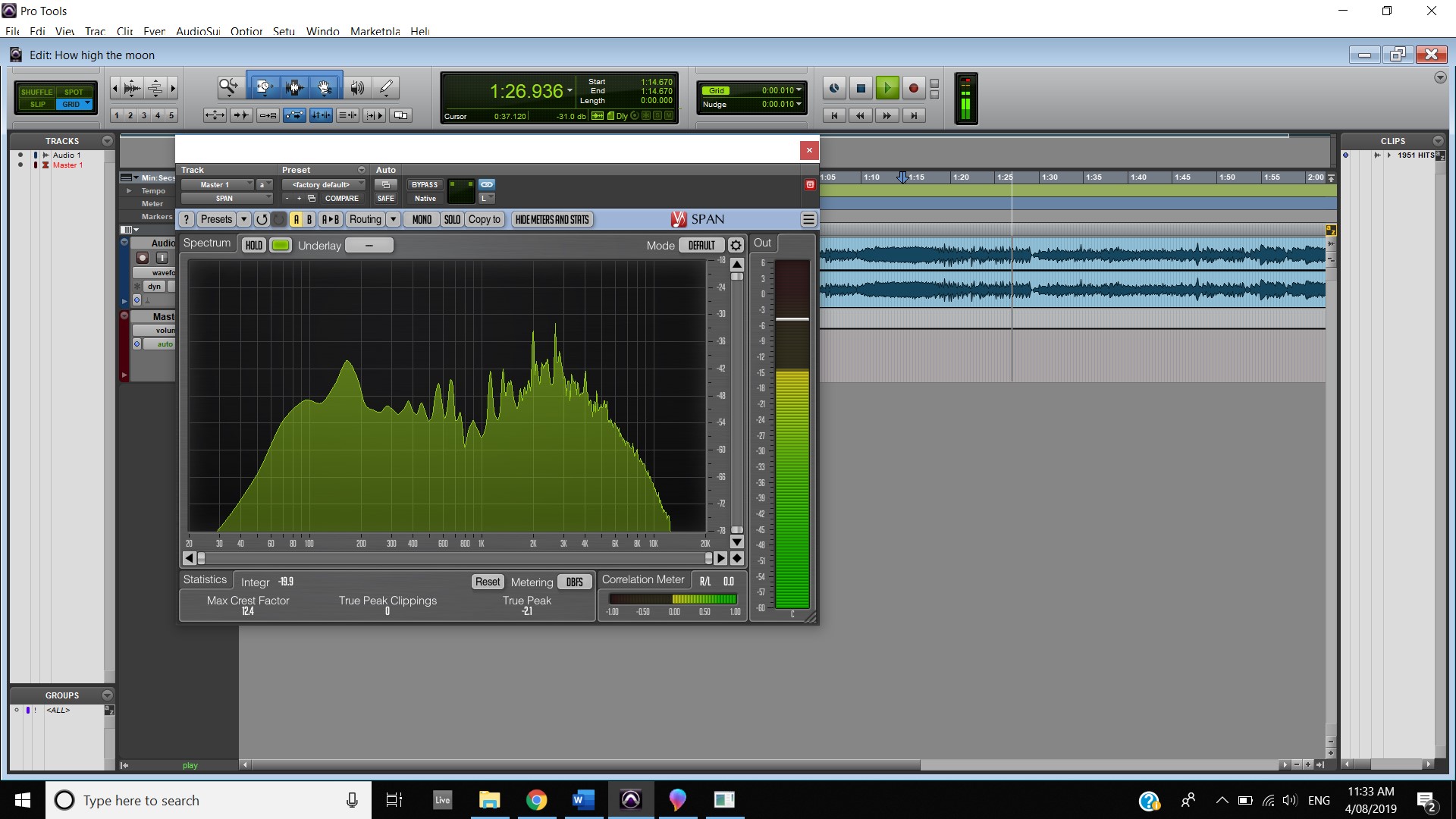
For most of the production the frequencies are fairly balanced with only the high frequencies being slightly emphasised followed by the lows, this can be proven when Mary Ford is singing her verse (First Screenshot) and during the guitar solo (Second Screenshot) both shown below. The high frequencies really are emphasised however at 1:09-1:19 through Mary Ford’s vocals. The mixing at the master faster is fairly constant at -3.4db for most of the record however it does bounce to -2.4 dB during Mary Ford’s vocals at 1:09-1:19. The vocals in the mix are blender in louder than the rest of the guitar parts throughout this record, the guitar parts themselves are blended in the background.
That’s All Right is a song originally performed by Arthur Crudup, However, it is known as the breakout debut single recorded and released by Elvis Presley. This was recorded on July 5 1954 at Sun Studios in Memphis, Tennessee (https://en.wikipedia.org/wiki/That%27s_All_Right). This version of the song was recorded in a 4/4-time signature in the key of D major at 104 BPM quite upbeat and fast texture compared to the original (https://getsongbpm.com/song/that-s-all-right/G6AMD7 & https://tunebat.com/Info/That-s-All-Right-Elvis-Presley/1mKhiITXCIpves7QbT4xo7). The recording features Elvis Presley providing vocals and acoustic rhythm guitar, Scotty Moore on lead guitar and Bill Black on double bass and there are no drums or other instruments. It is produced by Sam Phillips and all parts were played at the same time on one single track (https://en.wikipedia.org/wiki/That%27s_All_Right). The song itself came about by accident as the trio were having a break and during this time Elvis started playing That’s All Right in a fast style, the other two musicians jumped in and Sam Phillips made them start again so he could record it. Listening to this record you can tell that is was recorded in mono (https://www.discogs.com/Elvis-Presley-Thats-Alright/release/5786889) and live based on the instruments and how far they are from the microphone, this creates a unique listening experience as Elvis with his guitar are closest to the microphone and almost have a panning right stereo effect in the headphones, the bass and the lead guitar are place further away in the mix.
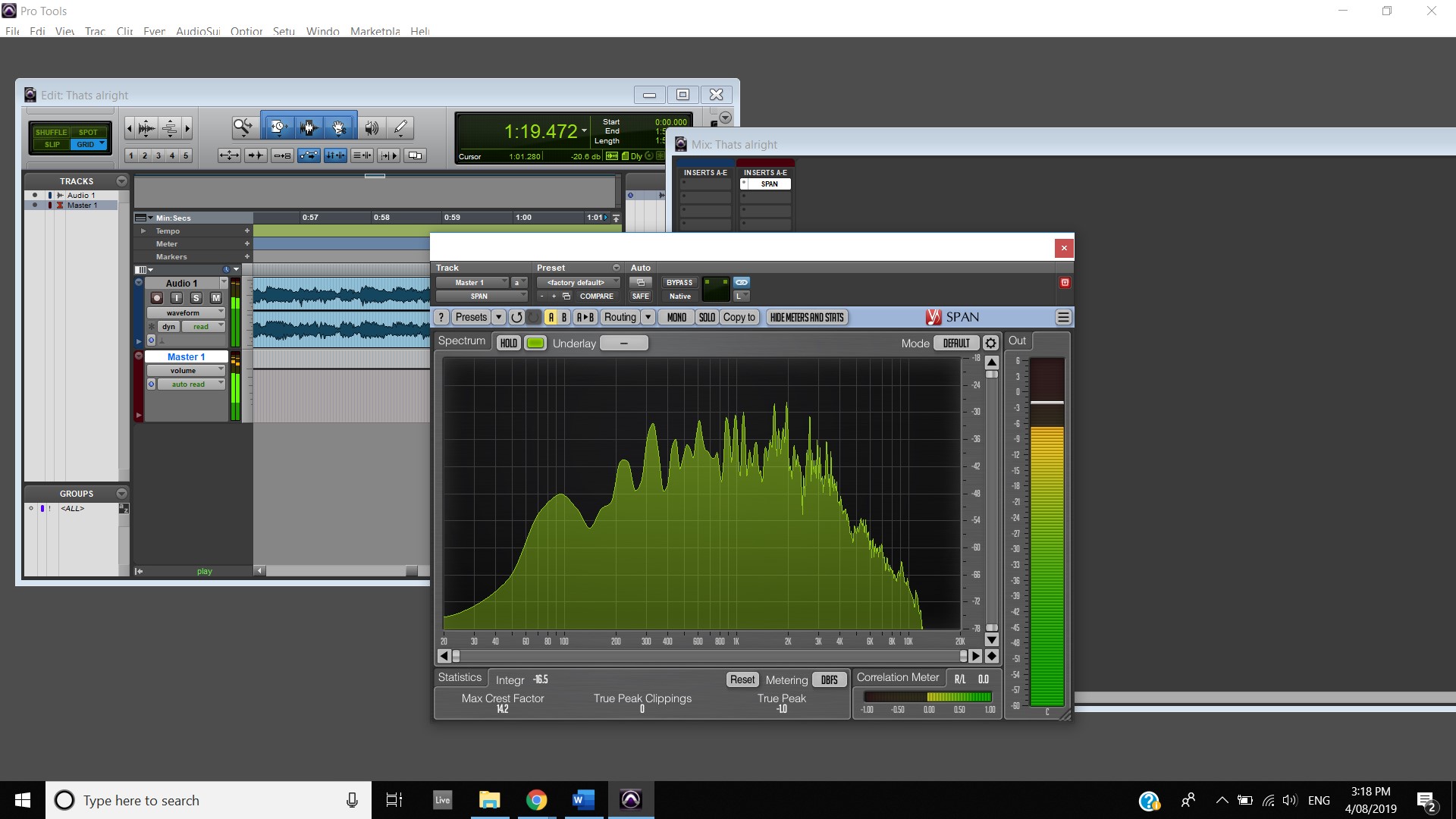
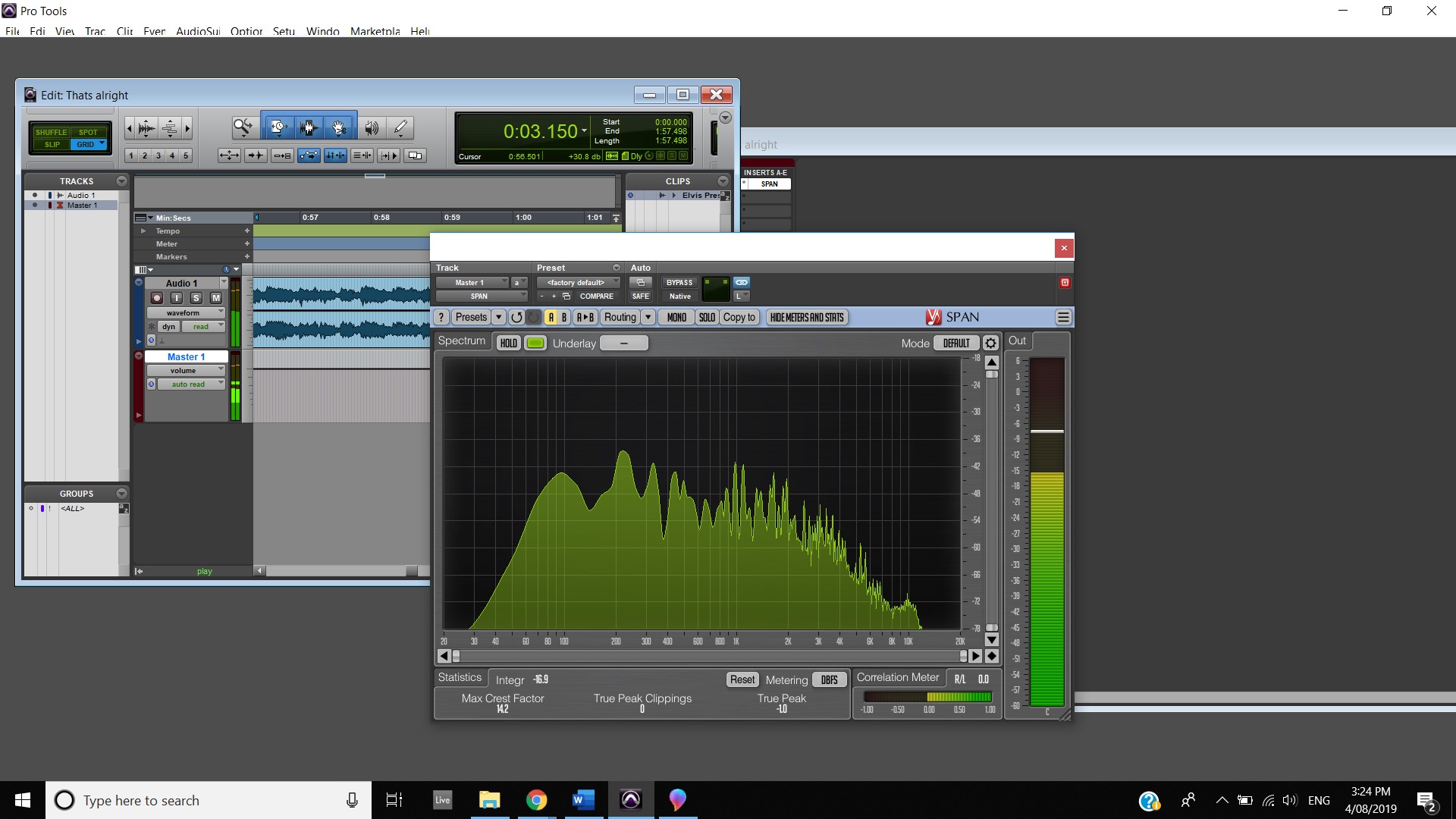
For most of the recording the mid-high (500-2K) frequencies are emphasised, however, the use of the bass in the intro drives up the low frequencies until Elvis vocals come in as shown below. Overall it is mixed fairly loud nearly clipping the master fader at -1.5dB however the peak is -0.6dB at 1:03 mins during the instrumental. The softest is during the intro where it hits -6.7dB.

 Music weekly blog